

 By Staff Report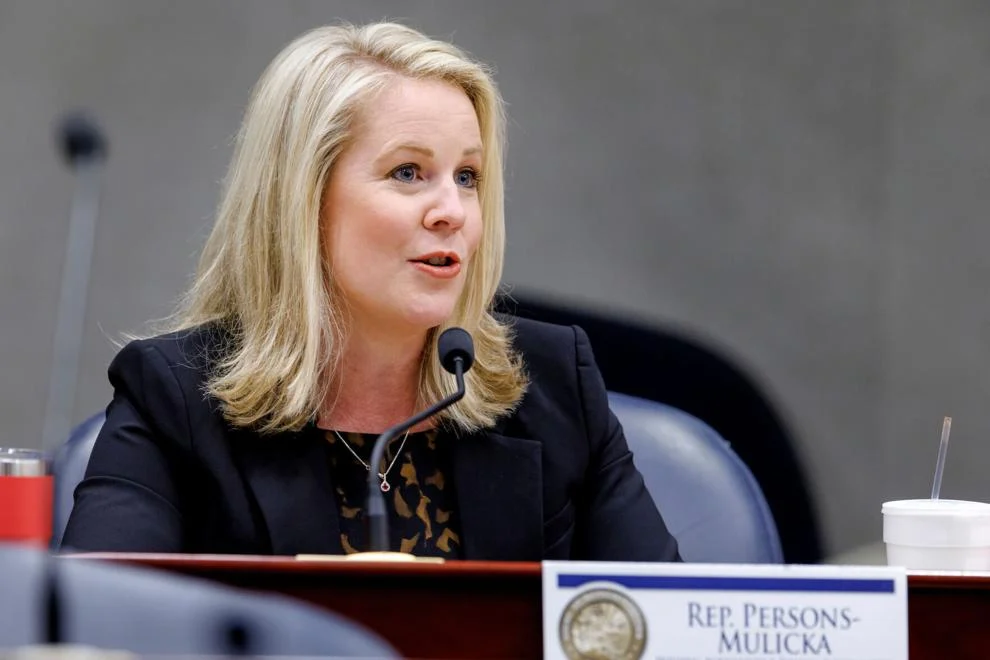
A bill that critics say could disrupt the ability of American citizens to adopt children or use surrogacy services involving China passed the House on Tuesday.
A floor amendment added to HB 905 would prohibit adoption or surrogacy if any party to the contract is a citizen or resident of a foreign country of concern — a designation in Florida law that includes China.
The underlying measure, titled the Foreign Interference Restriction and Enforcement (FIRE) Act, is described by supporters as an effort to protect the state from ideologies inconsistent with American principles.
The bill passed on an 86-20 vote that largely followed party lines, though several Democrats joined Republicans in support. Prior to the adoption and surrogacy amendment, the bill had bipartisan backing.
Bill sponsor Rep. Jenna Persons-Mulicka, R-Fort Myers, cited a case in California involving a Chinese couple raising 21 children — most born through surrogacy — who are under investigation for child abuse.
“It’s time to act,” Persons-Mulicka said. “I don’t want to wait until multiple babies are born in the state of Florida and shipped to China to be raised under Chinese control before we take action.”
Democrats argued the amendment had not been vetted by adoption and surrogacy attorneys and warned it could create unintended consequences for families seeking to adopt from countries such as China.
Persons-Mulicka said the amendment would not “impact, affect or prohibit any family within the state of Florida who is either a citizen or legally here in the state of Florida from utilizing adoption or surrogacy.”
The surrogacy provision was previously part of a broader bill (SB 1680) filed by Sen. Erin Grall, R-Vero Beach, that would have overhauled state surrogacy and fertility clinic policies. That proposal did not receive a committee hearing this year.
Florida law currently designates China, Russia, Iran, North Korea, Cuba, Venezuela and Syria as foreign countries of concern.
Persons-Mulicka described HB 905 as a “comprehensive package” that “tells China and our foreign adversaries that we are paying attention and to think twice before targeting Florida for influence and interference operations.”
The bill would bar the state from spending or receiving money from terrorist organizations and create a state designation process for domestic and foreign terrorist organizations.
It also would prohibit school voucher funds from going to K-12 or higher education institutions that promote or are affiliated with terrorist organizations.
Additionally, public universities and colleges would be required to report to the U.S. Department of Homeland Security if a student on a visa is found to be “promoting terrorism.” Institutions would be required to expel such students.
Both the House and Senate versions of the bill were amended to address potential changes in Cuba’s federal designation, allowing the state to suspend Cuba from its list of countries of concern if its federal status changes. Cuba has been governed by a communist regime since 1959, and many Cuban immigrants have settled in South Florida.
Over the weekend, President Donald Trump suggested a “friendly takeover” of Cuba, saying the country was “in big trouble.”
 AMBER PATINO