

 By Staff Report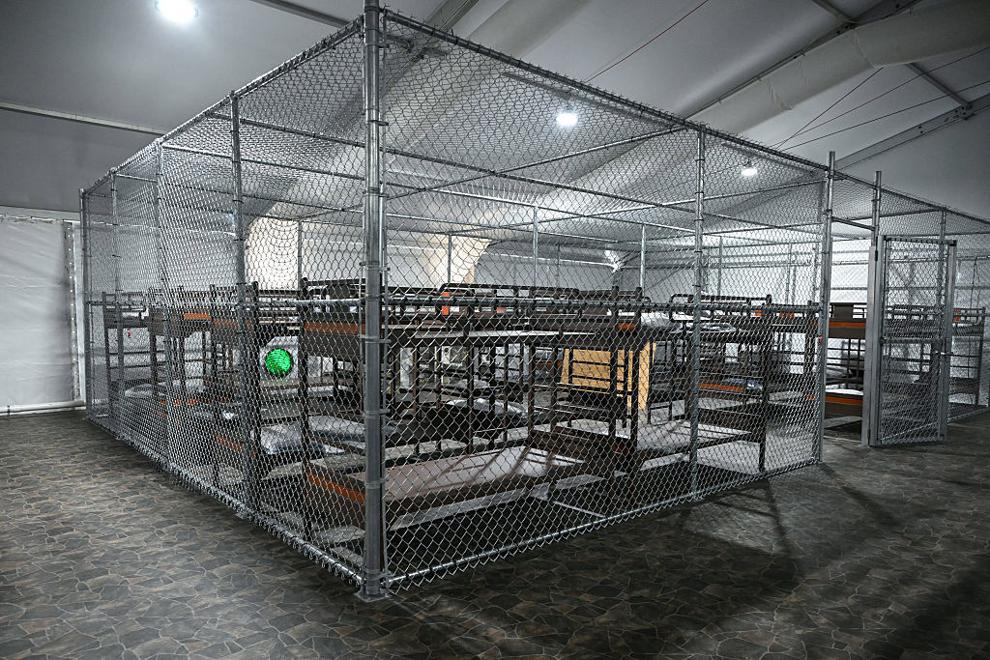
A group of sheriffs on a state immigration enforcement board sharply criticized the federal government’s mass-deportation efforts Monday, a stark departure from hardline policies in Florida, where Gov. Ron DeSantis has spearheaded collaboration with federal officials to remove undocumented immigrants.
Some members of the State Immigration Enforcement Council, which is made up of four sheriffs and four city police chiefs, said immigrants who are not criminals should be allowed to remain in the country under certain conditions.
“Those are the folks we need in this country that we embrace, because we are a country of immigrants,” said Polk County Sheriff Grady Judd, the council’s chair. “But we have allowed, what I call the criminal troublemaker, to just flood in this country and victimize people. And I think a path for the good folks with a good intention, for the right reason, is reasonable.”
The shift is notable in Florida, where DeSantis pushed for a state law last year requiring state and local law enforcement agencies to cooperate with federal immigration enforcement efforts. That law also created the council, and Florida became the first state to set up makeshift detention centers such as “Alligator Alcatraz” in South Florida.
While the council’s priority remains removing undocumented immigrants who are violating the law, members have softened their stance toward immigrants who do not have criminal records.
Judd said he has heard from conservative Republicans who “are active politically and active economically politically” and are concerned about immigrants “that now under this particular set of circumstances are being swept up and taken out of the country.”
“There are those here that are working hard, they have kids in college, are in school, they’re going to church on Sunday, they’re not violating the law, and they’re living the American dream,” he told council members.
Judd, who has been a staunch supporter of DeSantis’ immigration enforcement efforts, said he spoke with a Cabinet member who relayed those concerns to former President Donald Trump and that Trump was “not anti that conversation.”
Less than a year ago, during a council meeting, Judd urged Trump to sign more executive orders to allow state law enforcement to expedite the removal of undocumented immigrants, including those without removal orders or criminal records.
But on Monday, Judd said U.S. Immigration and Customs Enforcement is not deporting individuals who are mentally ill or “have challenges,” and instead is removing people who “are healthy and can work.”
He and other sheriffs said there is “nothing we can do about it” and placed blame on Congress for failing to address immigration policy.
“They need to get off their butts and they need to fix it,” said Charlotte County Sheriff Bill Prummel.
Judd suggested writing a letter to elected officials, including Trump, the Speaker of the U.S. House, the Senate majority leader and federal agencies, urging action on a path to citizenship.
But he said such a path would come with conditions.
“We’re going to give you five years, and you’ve got to learn to speak English, you’ve got to pay a fine for coming into the country illegally, a civil fine,” Judd said. “And you’ve got to not be on the taxpayer dollar, and you’ve got to work, and you’ve got to put your kids in school, and we already know those people who are doing that.”
Prummel said Florida differs from other states because law enforcement is not “just raiding businesses and homes.”
“But unfortunately, when ICE gets involved, you have the collaterals, and that’s what’s happening,” he said.
In January, ICE raids in Minnesota targeted neighborhoods, restaurants and schools and sparked protests, with agents killing two U.S. citizens during enforcement operations in Minneapolis.
“We’ve not had any conflict out of the community because we’re not going into strawberry fields or citrus groves, or construction sites — it’s not necessary to do that,” Judd said.
Last May, however, ICE and state law enforcement agencies, including the Florida Highway Patrol and the Florida Department of Law Enforcement, raided a Tallahassee construction site about a mile from the Florida Capitol and detained approximately 150 people, the majority of whom were deported.
 AMBER PATINO